
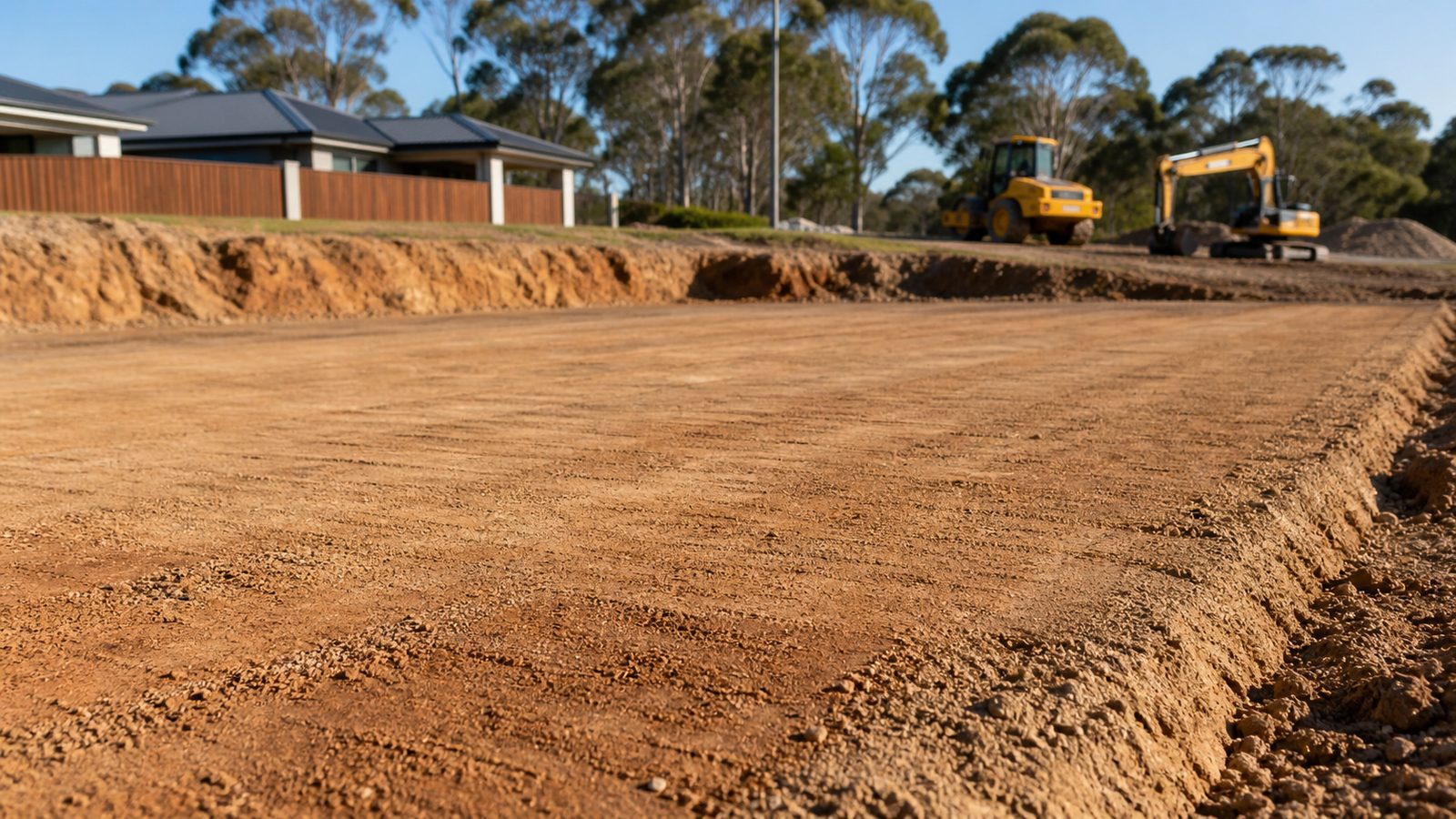
Name the use before deciding to keep soil
Start with the finished project. Are you hoping to improve a garden bed, reshape lawn, prepare a slab area or fill a redundant depression? Write down the intended use and show its location on the site plan. These uses have different requirements, so “keep the soil” is too broad an instruction. Ask the designer, builder or appropriate adviser which material is suitable for that purpose and what preparation is required. The excavation contractor can then price a defined handling task rather than guessing what will happen after the dig.
A pool excavation in Berwick can produce surplus material while the surrounding landscape is still undecided. A new shed project in Cranbourne may need some material removed even though another part of the property needs shaping. Keep those decisions linked to actual finished levels. Retaining material because there is an empty corner today may prevent access for paving or drainage tomorrow. If there is no confirmed use, compare removal with the full work of storing and moving it later. An apparently convenient pile can become a separate job once access narrows.
Keep environmental suitability and engineering suitability separate
Material can raise more than one kind of suitability question. Its environmental condition concerns what is in it and where it may be managed. Its engineering suitability concerns how it performs in the proposed construction. A material accepted at a destination is not automatically appropriate beneath a slab or behind a retaining wall. Ask the person responsible for each decision to state what they need to know. A general description on a delivery docket should not be treated as a design specification.
EPA Victoria explains how waste soil is classified and managed, including lawful receiving places. Sampling or specialist advice may be needed depending on the material and its history. For the construction decision, give the relevant designer the proposed source and intended location. Avoid substituting a homeowner’s visual check for either assessment. The practical outcome you want is a clear instruction about which material may be reused, where it may go and what conditions apply, with unresolved questions identified before it is moved.
Separate materials only where there is a useful reason
Ask the contractor what distinguishable materials are likely to be encountered and whether separate handling makes sense for the agreed uses. A garden surface layer, underlying excavated soil and old construction debris should not automatically become one mixed stockpile. If some material is intended for later landscaping, describe how it will be kept separate from the excavation spoil that is leaving. The separation plan should match the actual space available and the contractor’s method; it should not rely on sorting a mixed pile by hand afterwards.
Use simple labels on the project plan so everyone understands the destinations. For example, identify a retained garden-material area and a removal loading area without calling either a certified product. If unexpected material appears, preserve the distinction and ask for advice before mixing it with material already assigned a use. In a narrow Hampton Park backyard, several piles may be impractical. That is a reason to reconsider the sequence or remove material progressively, not to promise storage that blocks every route the next trade needs.
Draw the stockpile into the access plan
A stockpile occupies working space as well as ground area. Ask how the excavator reaches it, how the next machine will retrieve material and which routes must stay open. Include the wall builder’s access, the concrete delivery arrangement and any area needed for pool equipment or other materials. A pile beside the work may seem efficient until the next trade arrives from the same side. Review the stockpile location against the whole programme rather than the first morning’s excavation only.
Ask the contractor to select a safe position in relation to excavations, structures, services and site drainage. WorkSafe Victoria’s excavation guidance is relevant to planning and controlling excavation risks. Do not direct a driver to tip beside an open cut just because that location is convenient to you. If the proposed pile location changes, obtain the contractor’s agreement before deliveries begin. Homeowner preferences about views or lawn damage can be discussed, but they need to fit the safe working arrangement.
Decide how the material will be moved a second time
Ask where retained soil must ultimately end up and when that location will become available. If a wall, drain or slab needs to be built first, placing the material directly into its final position may not be possible. The quote should distinguish initial stockpiling from later spreading, trimming or placement. Check whether the equipment needed for the return work can still reach the area once construction has advanced. A gate that is usable now may be blocked by a new fence or a delivered structure later.
Write down what “spread on site” means. It might mean rough placement in an agreed area, while you are expecting finished lawn preparation or a pad ready for construction. Those are different outputs and may require different materials or trades. Ask the contractor to describe the final condition in ordinary language and identify any design or testing requirements separately. If you decide to postpone landscaping, keep the unfinished task explicit. A pile left by agreement is not the same as a completed landscape surface.
Review the source before accepting imported material
If your project needs material brought in, ask the supplier for information about its source and intended use before booking delivery. Find out whether the product being offered matches the designer’s specification and whether the supporting information relates to this load or only to a general product description. An offer described as “free fill” still requires an assessment of what is being accepted and why it suits your project. The handling and future removal consequences remain yours to consider even if no purchase price is attached.
EPA’s advice to landowners considering free soil is a useful starting point before accepting an offer. For a homeowner, the practical step is to pause a poorly documented delivery rather than trying to sort the questions after tipping. Tell whoever is receiving the truck what has been approved and who to call if the material differs from the description. A driver should not be asked to unload merely because they are already at the gate and the intended decision-maker is unavailable.
Make off-site removal a documented destination decision
For material leaving the property, ask where it is proposed to go and what acceptance conditions apply. Confirm who is arranging transport and who will retain the relevant records. Avoid a scope that says only “take dirt away” if you cannot tell what happens after the truck leaves. Different material streams may have different destinations, so keep the descriptions aligned with what was actually excavated. You need a record that connects the project, the material and the receiving location sufficiently to answer later questions.
A neighbour’s offer to take surplus soil should be checked with the same care as another destination. Ask about the intended use, the receiving site and any relevant requirements before allowing a truck to be redirected. Distance alone is not a measure of suitability. If the receiving arrangement changes during the job, ask for that change to be documented. The person who coordinates excavation may know a convenient destination, but convenience should follow the material and site checks rather than replace them.
Include unknown material in the brief
Before excavation, give the contractor what you know about former structures, filled depressions, old driveways or earlier earthworks. Identify where the information came from and distinguish something you observed from something a previous owner mentioned. This helps the contractor ask useful questions without treating an uncertain memory as a confirmed record. If there is an old plan or a prior assessment, share the actual document. A summary such as “the previous owner said it was all clean” does not give the adviser much to work with.
Agree what happens if the excavation reveals unexpected waste, staining, odour or suspect fragments. Ask who stops the affected handling, who obtains appropriate advice and how the rest of the site will be managed while the question is resolved. Do not collect or break up suspect material yourself to identify it. Keep people away from the affected work and communicate through the contractor. The useful variation discussion concerns the assessment and resulting handling plan, rather than an immediate promise that everything can continue under the original removal allowance.
Compare soil options using the complete sequence
Place the practical alternatives side by side in your own notes. For each, describe the material kept or removed, the location, the required handling and the final outcome. Retaining a selected amount for a confirmed garden area may be straightforward, while retaining everything for a future project may create more movements. Full removal may simplify access but require later purchase of a specified material. Ask the contractor to price the actual alternatives you are considering so the comparison reflects the same excavation and access conditions.
You can use the soil-volume guide to frame a quantity discussion, but do not translate an initial volume into a guaranteed truck count or final disposal amount. Ask how quantities will be recorded and how the quotation deals with changes. Keep volume, material suitability and handling effort as separate questions. This makes it easier to understand why two quotes differ and to identify which assumption you need clarified before choosing between them.
Keep the close-out records with the property documents
When excavation is finished, confirm the actual destinations of retained and removed material. Ask for the records agreed in the scope and note any location where material remains for later work. If an imported product was used, retain its identification and delivery information with the project documents. For work governed by a design specification, obtain the required placement and testing records through the responsible trade or adviser. A neat finished surface alone does not answer what was placed underneath it.
Walk the accessible site and compare the remaining work with the written agreement. Is a stockpile awaiting the landscaper, is final trim scheduled after another trade, or has some material intentionally been left untouched? Record the answer so the next contractor does not assume it is accidental waste. For a busy family occupying the property through construction, also confirm which routes are usable and which areas remain controlled by the contractor. The soil decision is complete when the material has an appropriate destination and the remaining tasks are understood.